



Published on June 20, 2026
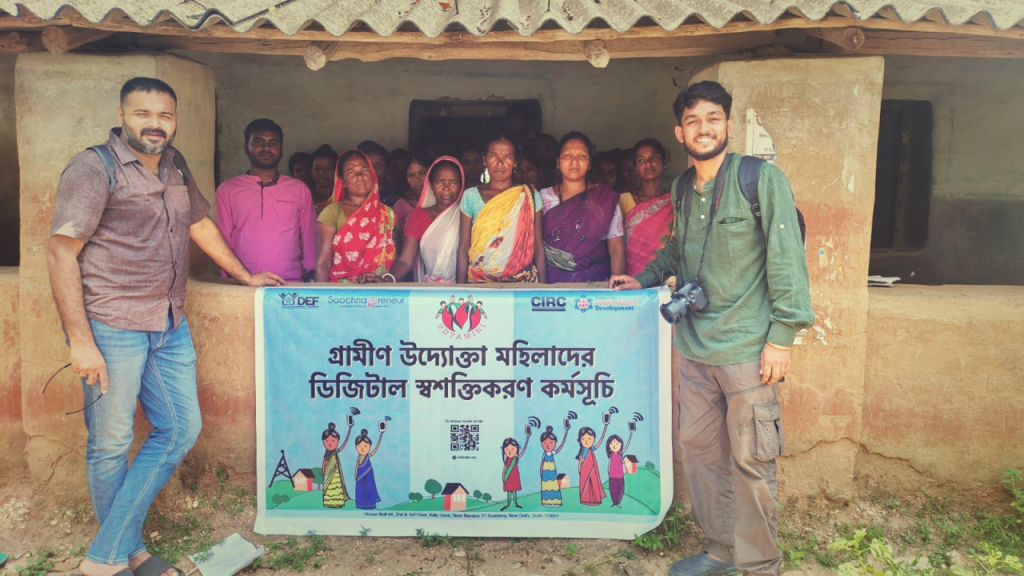
Deep within the rugged hills of Ayodhya in Purulia lies a world that often remains invisible to mainstream development narratives. During my recent visit, I had the opportunity to interact with Rural Women Entrepreneurs (RWEs) living in these remote tribal hamlets—communities surrounded by breathtaking natural beauty, yet isolated from many of the opportunities that development promises.
What struck me most was not the geographical remoteness, but the depth of the information gap. These villages remain largely disconnected from essential information, business opportunities, technical knowledge, education systems, and financial services. Most women sustain their families through seasonal cultivation, forest-based livelihoods, and traditional tribal practices passed down through generations. While these practices preserve culture and identity, they often do not provide sufficient income or economic security for the future.
Yet behind every conversation, I sensed something powerful—hope.
There was an unspoken expectation in their eyes that perhaps this time, someone had come not merely to observe their lives, but to walk alongside them in building a better future.
For generations, these communities have been approached by different stakeholders, institutions, and agencies. However, meaningful engagement that strengthens their capabilities, nurtures their aspirations, and creates sustainable livelihood pathways has often remained limited. The gaps are evident—limited access to information, weak market linkages, lack of business mentoring, inadequate exposure to enterprise development, and minimal support for licensing and formalization processes.
Under the UDYAMINI Programme, Digital Empowerment Foundation (DEF), through the dedicated efforts of SBM Madhumita Kisku, is attempting to build a grassroots enterprise ecosystem that is simple, practical, and responsive to local realities. The objective is not merely to promote businesses, but to create confidence, ownership, and self-belief among women who have rarely been included in formal economic systems.
This is not an easy geography for development intervention. Here, concepts such as entrepreneurship, financial planning, digital inclusion, or even the Sustainable Development Goals (SDGs) are often far removed from everyday realities. Before discussing enterprises, one must first build trust. Before introducing markets, one must first nurture confidence. Before talking about growth, one must first understand lived experiences.
For me, this visit was not about assessing businesses; it was about understanding people. It was about recognizing the psychosocial realities of women who have spent years navigating hardship with resilience and dignity. It was about exploring how development can help shift everyday behaviours around savings, spending, earning, and decision-making without disrupting cultural identity and community values.
What we witnessed today was only the beginning—an ice-breaking moment. A first step towards building relationships, strengthening community belief, and creating a shared vision for the future.
The road ahead is long, but the possibilities are immense.
As development practitioners, we often speak about protecting nature. Yet we seldom acknowledge the communities who have protected nature for generations. The Adivasi communities of Ayodhya Hills are among the true custodians of our environment. Their wisdom, resilience, and deep connection with nature deserve not sympathy, but genuine partnership and respect.
Real development in places like Ayodhya will not come through complex strategies or sophisticated language. It will emerge through trust, consistency, human connection, and actions that people can understand and embrace.
Today was not about outcomes.
It was about beginnings.
And sometimes, beginnings are the most important milestones of all.
Written by Dipayan Mukherjee at: Beyond the Hills
Sr. Officer – Program Division